How AI Is Transforming Restaurants: Practical Uses for Small Restaurants and Food Service Businesses
By RuAiReady
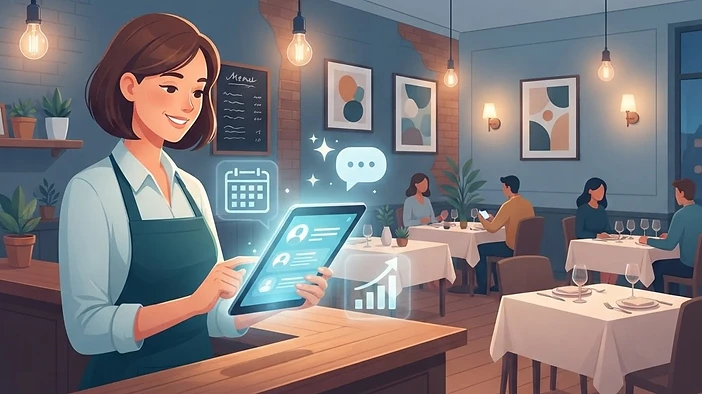
For most small restaurant owners, the hardest part is not cooking the food. It is everything around it: staff scheduling, inventory, answering the phone, keeping up with reviews, and filling seats on slow nights. Artificial intelligence can take on much of that overhead without changing how the food is made.
One of the clearest wins is customer communication. An AI assistant on a restaurant website or Google Business profile can answer questions about hours, menu items, allergens, and reservation availability at any hour. It can take online orders, confirm pickup times, and flag special requests for the kitchen. Front-of-house staff then spend less time on the phone and more time with diners in the room.
Inventory and ordering are another strong use. AI can track what sells and what sits, predict demand based on day of week and season, and flag when stock is running low before a Friday rush. Some tools can even generate suggested order quantities so the owner is not guessing or overbuying. Food waste drops, and margins improve without raising prices.
Marketing gets easier too. AI can turn a menu update or seasonal special into social media posts, reply to reviews with a consistent voice, and suggest promotions for slow nights based on past traffic. A small restaurant that posts inconsistently can suddenly show up in feeds every day without hiring a social media manager.
Restaurants have real limits. Health and safety regulations are strict, and AI must never be involved in food prep decisions or compliance filings. Customer data, especially payment information, must go through PCI-compliant systems. AI-generated responses to reviews should be checked for accuracy before posting, since a wrong claim about ingredients can create liability for allergens.
A practical first step: pick one task, such as answering the phone or posting to social media, and run an AI-assisted process alongside your current one for 30 days. Compare the time saved and the customer response. The goal is not to replace the people who make your restaurant what it is. It is to give them fewer distractions and more time for hospitality.