How AI Is Transforming Healthcare: Practical Uses for Small Practices and Clinics
By RuAiReady
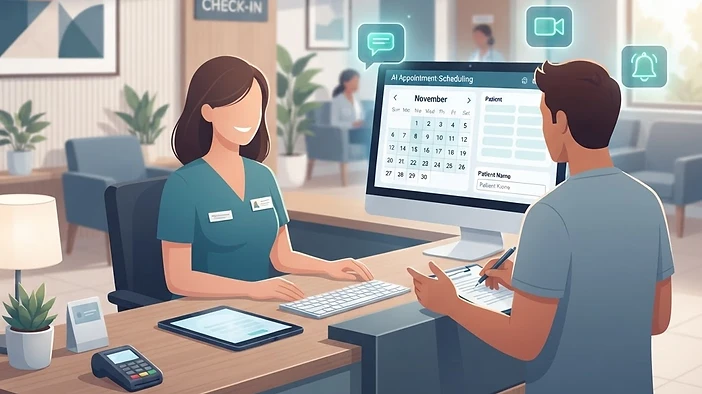
For most small healthcare practices, the challenge is not treating patients. It is the administrative work that grows around every visit: scheduling, intake forms, insurance questions, and clinical notes that eat into the evening. Artificial intelligence can reduce that load without changing how care is delivered.
One of the strongest uses is patient communication. An AI assistant on a clinic website can answer common questions about hours, services, and preparation for a visit at any time, collect insurance details, and route urgent messages to staff. Front desk teams then spend less time on the phone repeating the same answers and more time with patients in the office.
Documentation is another area where AI is delivering results. AI scribes can listen to a visit and draft clinical notes for the provider to review and approve. The provider still makes every medical judgment, but the charting work shrinks from hours to minutes. Practices using these tools report finishing notes the same day instead of catching up at night.
Operations benefit too. AI can flag appointment gaps and no-show risks, suggest reminder sequences, and summarize referral or billing questions before a staff member picks them up. Inventory alerts for commonly used supplies can be automated so a clinic is not caught short between orders.
Healthcare has hard limits. Anything touching protected health information must use HIPAA-compliant tools, and AI must never make diagnostic or treatment decisions. A provider should review every AI-drafted note before signing it, and patients should be told how their information is used. Choosing vendors that sign a business associate agreement is a practical starting point for a small practice.
A realistic first step: pick one workflow, such as appointment reminders, and measure the current no-show rate. Run an AI-assisted process for 30 days and compare. The goal is not to replace clinical staff. It is to give them more time for patient care.